Nairobi’s New Sound
It isn't one genre. That's the whole point. Africa's youngest streaming city is playing dancehall, konpa, arbantone and gospel all at once, and the numbers prove it. Issue 01 of the Flavor Cover.

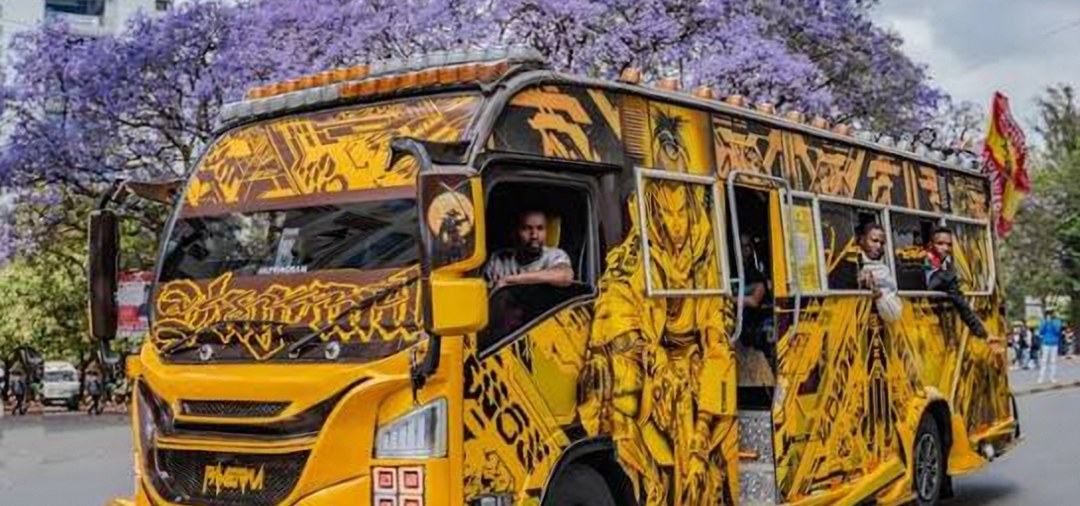
Ask ten people in Nairobi what the city sounds like right now and you'll get ten different answers. A matatu on Ngong Road is blasting arbantone. A café in Kilimani is playing konpa. Somebody's cousin swears gospel is having a moment. A few years ago, one genre at a time owned the city. In 2026, nobody owns it, and that might be the most interesting thing about Kenyan music today.
This is our attempt to map it.
Young city, restless earsWho's holding the aux
Start with who is listening. In Spotify's June 2026 data, listeners aged 18 to 24 accounted for 53.7% of all streams in Nairobi. That's the highest share of the three African cities Spotify compared, well ahead of Lagos at 44.4% and Johannesburg at 29.9%. Between 2am and 5am, that age group makes up 55% of everything the city plays.
Their listening day looks different, too. Across all ages, Nairobi's busiest listening hour is 6pm, but for 18 to 24-year-olds the peak comes at noon, and almost 40% of their daily listening happens between 10am and 4pm. In other words, the city's soundtrack is increasingly chosen by people who are still in school, just starting work, or working for themselves, with headphones in all day.
Whatever Gen Z presses play on, Nairobi hears. So what are they pressing play on?
The fastest riserKingston, by way of Eastlands
The single fastest-growing genre among young Kenyan listeners in June was dancehall, up 95% on the same month a year earlier. Bongo Flava, the Tanzanian sound, was next at 75%. Gengetone, the genre people have been declaring dead for years, still grew 48%.
The influence itself isn't new: genge, the sound that started Nairobi's Sheng music boom in the 2000s, was hip-hop with dancehall in its DNA. What's new is the scale. Dancehall's growth is a reminder that Kenya's young listeners aren't only following Lagos and Johannesburg. They're looking to the Caribbean, and to their neighbours across the border.
Genge DNA, new clothesArbantone runs the streets
If gengetone defined the late 2010s, arbantone is its younger sibling. It grew out of a new crop of Nairobi artists around 2023, and it borrows openly from the past: producers sample old-school Kenyan classics and Jamaican throwbacks, speed them up and lay new, dance-ready beats underneath. The lyrics are in Sheng, about everyday young Nairobi life, and they're written to be lip-synced.
That last part matters. Arbantone was built for TikTok, and TikTok returned the favour. Its songs are short, catchy and made for dance challenges. Producers like Motif Di Don are credited with shaping the sound, while artists like Tipsy Gee and Gody Tennor took it from phone screens to radio and TV.
Slow it downThe Caribbean, slowed down
Not everything is fast. The year's biggest cross-border hit, “Finale” by Kenya's Bien and Tanzania's Alikiba, is built on konpa (also spelled kompa), the smooth Haitian dance rhythm that has quietly spread through African pop. Alikiba has described konpa as an international sound that has given the region an identity.
Kodong Klan, the seven-voice Nairobi collective, went the same way in September with “Your Body”. Member Charisma signed off his announcement of the song with a simple slogan: konpa to the world.
The plot twistNobody saw this coming
Here's the number that surprised everyone. Among young Kenyan listeners, gospel grew 37% year on year. Drill, which a lot of people assumed was the future of youth music, grew just 6%. That means gospel is growing roughly six times faster than drill among the very generation running the club mixes.
It fits a wider pattern in the data. Young listeners are streaming more of almost everything: amapiano up 34%, R&B up 28%, Afrobeats up 25%, Afropop up 21%. They aren't choosing between the club and the church. They're doing both, sometimes on the same playlist.
The breakoutFour o'clock tea, all year
If you want one song that sums up 2026 so far, it's “Chai ya saa kumi” by Ywaya Tajiri. In June it was the most-streamed song in Nairobi on Spotify, and Ywaya's streams among Kenyan 18 to 24-year-olds were up 6,151% on the year before, the biggest jump of any emerging artist. Behind him on that list were OnlyMoh, Virusi Mbaya, Codey and JayLo, all growing by thousands of percent.
It's not only newcomers. Prince Indah, the ohangla star, grew 221% among young listeners. Nyashinski, Bridget Blue, Kinoti and Nikita Kering' all more than doubled or came close. Brandy Maina and Maandy grew by more than 200% each.

On repeat right nowOctober's main character
If October has a name, it's Kapitani. He has been releasing at a pace few Kenyan artists can match this year, from “Kitemeo” in July to “Safe” with Countree Hype in September. On 12 October he dropped “Shing” with arbantone favourite Toxic Lyrikali, and he was back again on 25 October with “More”. Several songs, one artist, all in rotation at once.
Mejja, one of gengetone's biggest names, has opened a new chapter too. After more than two decades in music, he finally released his debut album, Mtoto wa Khadija, led by the TikTok-friendly “Siaka Siaka” with Uganda's Fik Fameica.

So what is the new sound?The new sound is all of it
The old guard isn't being pushed out. Sauti Sol, on an indefinite break since 2023, was still the most-streamed Kenya-connected act in Nairobi in June, and still growing, up 30% among young listeners. And this month Bien, one of the group's four voices, became the first African artist signed to Quality Control Music, the Atlanta label behind Migos, Lil Baby and City Girls. Its co-founder Coach K called him an artist who could hold a stadium with just a guitar.
Put it all together and the picture is clear. Nairobi isn't picking a lane. It's playing dancehall and gospel, konpa and arbantone, Sauti Sol and Ywaya Tajiri, often in the same hour. The new sound of Nairobi isn't a genre. It's a city with its ears wide open.

Sources
- The Star: Gospel overtakes drill as Nairobi's Gen Z embraces diverse tastes (Jul 2026)
- Citizen Digital: Nairobi's Gen Z leads Africa in streaming (Jul 2026)
- Citizen Digital: Prince Indah, Ywaya Tajiri lead streaming gains (Jul 2026)
- Tech-ish: Spotify Kenya artist growth, June 2026
- Capital FM: The advent of the arbantone genre
- Afrocritik: The rise of arbantone (Feb 2024)
- ONErpm: How Bien and Alikiba's Finale became East Africa's biggest hit
- OkayAfrica: Alikiba's next act
- K24: Charisma on Kodong Klan's Your Body (Sep 2026)
- Deezer: Kapitani discography
- Apple Music: Safe by Kapitani
- Ghanamma: Mejja on Mtoto wa Khadija
- K24: Bien signs with Quality Control (Oct 2026)
- Mpasho: Bien first African artist on Quality Control (Oct 2026)